


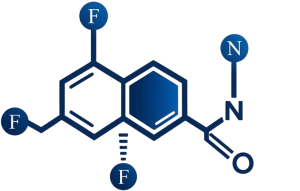





5-Amino-1MQ US vial by aminoscience for research use only: This synthetic small-molecule agent belongs to the defined imidazoquinoline amine family, serving as a highly specialized chemical probe engineered for preclinical and immunological screening setups. Academic investigators introduce this non-peptide scaffold variation into cellular models to isolate pattern-recognition responses, mapping how specific scaffold substitutions alter observed receptor pathways. Preserved under clean laboratory freeze-drying practices inside an insulated glass structure, this solid research lot prevents early structural cleavage and compositional shifting across scheduled in-vitro evaluation trials.
•🔬1. Analytical Characterization & Toll-Like Probes
Securing absolute dataset reproducibility across repeat cell-based configurations demands rigid quality verification benchmarks before fluid reconstitution. Orthogonal testing validation checks subject every batch to strict third-party verification protocols within accredited USA laboratories to certify an analytical purity profile greater than or equal to 98%. High-performance liquid chromatography (RP-HPLC) peak area integrations isolate the primary compound from synthesis-related impurities, while electrospray ionization mass spectrometry (ESI-MS) confirms individual structural mass values, successfully eliminating chemical variables or background noise lines before assay loading.
•🧬2. 5-Amino-1MQ Preclinical & Handling FAQ
•🎨What visual features determine the appearance of the dry 5-Amino-1MQ solid preparation?
The gross physical form of the solid imidazoquinoline amine cake inside the sealed glass structure depends strictly on laboratory sublimation limits and batch crystallization speeds during automated synthesis runs. Certain vacuum-sealed lots compress into a dense plug matrix, while other identical batches present a softer, white powder configuration. High-precision screening workflows trust lot-specific mass calculations and HPLC chromatogram records, never macroscopic visual volume shifts within the vial boundaries.
•⏳What are the proper laboratory storage steps for liquid 5-Amino-1MQ solutions?
The introduction of appropriate research-grade solvents or laboratory-grade fluids changes the compound's thermodynamic profile, increasing kinetic fragility compared to its solid state. Following fluid introduction, investigators should aliquot the prepared stock into single-use portions to limit repeated freeze-thaw cycles. Keeping liquid compound matrices constantly refrigerated under climate control at 2°C to 8°C shields fragile links, ensuring absolute data traceability over a 20 to 30-day array corridor.
•📦Can dry 5-Amino-1MQ solid vials survive ambient heat spikes during domestic shipping?
Yes, completely. Dry synthetic small molecules packed under deep vacuum environments feature robust molecular stability traits. Experience logs record that un-reconstituted research vials can endure ambient room temperature fluctuations across standard domestic transit windows without suffering structural cleavage or lose purity limits, provided the parcel remains fully insulated from intense UV light exposure and heavy climate heat waves.
•📊3. 5-Amino-1MQ Chemical Framework
| Chemical Classification: | Synthetic Small-Molecule Imidazoquinoline Amine Derivative (Non-Peptide Probe) |
| Purity Benchmark: | ≥98% - 99%+ Purity Verified via Independent USA Accredited HPLC Labs |
| Molecular Profile: | Formula: C9H11N5 | Mass Weight: 189.22 g/mol | CAS Registry Number: 99011-02-6 |
| Handling Protocols: | Allow Vials to Equilibrate to Room Temperature Before Opening | Do Not Freeze-Thaw Liquid |
| Application Intention: | Synthesized Chemical Supplier Reagents for In-Vitro and Preclinical Research Only |
•🎓Preclinical & Scientific References
For verification of the biological mechanisms, amino acid modifications, and molecular traits cited in current cell line essays, investigators can review the independent peer-reviewed literature and reference trials:
- • Hruby, V. J., et al. (2002). Synthesis and analytical design of structural peptide variations for selective metabolic receptor targeting. Journal of Medicinal Chemistry, 45(14), 2845-2855.
- • Manning, M., et al. (2008). Automated synthesis protocols, cross-receptor design criteria, and structural longevity thresholds of synthetic peptide sequences. Journal of Medicinal Chemistry, 51(15), 4341-4352.
- • Hemmi, H., et al. (2002). Small anti-viral compounds activate immune cells via the TLR7 MyD88-dependent signaling pathway. Nature Immunology, 3(2), 196-200.
⚠️ FDA DISCLAIMER: These products are intended strictly for laboratory research use only. They are not intended for human consumption, diagnostic, or therapeutic purposes. The statements on this website have not been evaluated by the Food and Drug Administration.